
PLOUGHSHARES INTO SWORDS
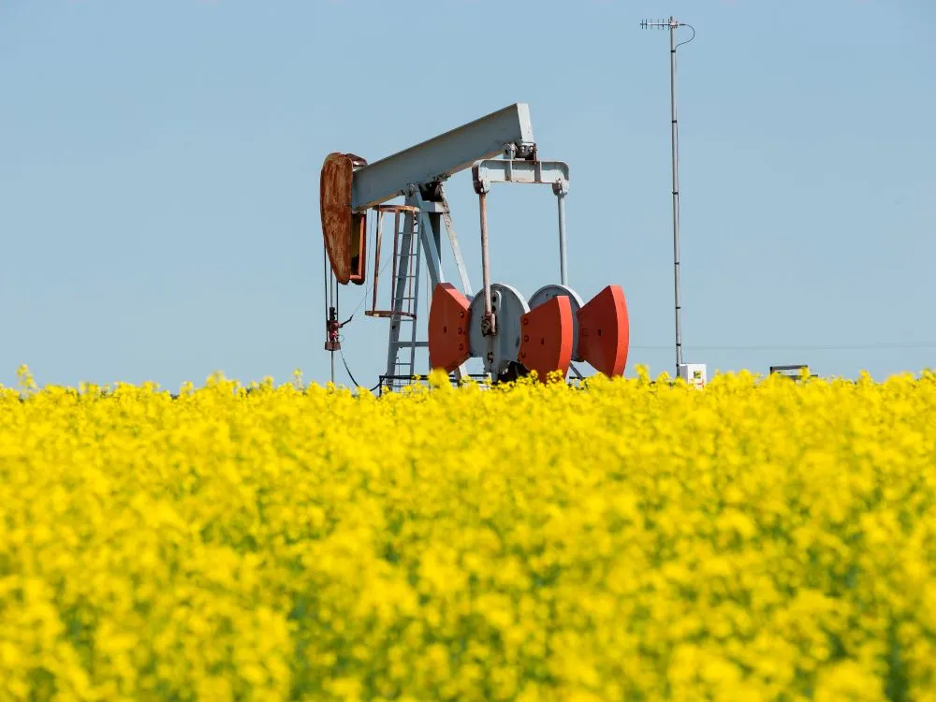
Fighting the Alberta separatist impulse with the lessons of Canada’s agrarian founding
A COUNTRY BUILT BY CANADIANS
The Fathers of Confederation were, at bottom, agrarian strategists. They understood that the prairies, vast, underpopulated, and dangerously adjacent to a republic with an ideology of continental absorption would be held only if they were farmed. The steel plough and the CPR locomotive were geopolitical instruments as much as they were agricultural or commercial ones. The prairie West was populated before the Americans got to it, and by people who filed their land claims under an explicitly Canadian flag.
THE IRONY THAT HISTORY ENJOYS MOST
The province whose identity is most deeply rooted in the agrarian tradition is now being courted, and supported, by the very continental force that Canada’s agrarian project was designed to hold at bay. Steve Bannon’s network has called Alberta “the linchpin.” The separatist movement is loud, well-funded, and foreign-amplified.
Albertans have legitimate grievances: about equalization formulas, about pipeline approvals refused or reversed, about a federal government that spent a decade signalling that Alberta’s dominant industry was a liability to be managed rather than a strength to be deployed. These grievances deserve substantive responses and the argument that follows is not that they are imagined, but that separation is the wrong instrument for resolving them.
THE AUTONOMY PARADOX
Begin with the mechanics, because the leave campaign never does. Suppose the separatists win. An independent Alberta is still landlocked; sovereignty does not shift it an inch closer to tidewater. What independence does is convert arrangements Alberta currently shapes as a full partner into international negotiations it must conduct as a small, isolated state, and from the weakest chair at the table. Against Canada it would be a departed province begging transit through the union it had just quit. Against the United States it would be a market of 4.7m bargaining over pipelines with a partner of 340m that has every incentive to dictate terms.
And any effort at joining the United States forfeits a great deal. Canadian provinces already wield powers no American state is permitted to want. Alberta can run its own pension, police its own securities markets, collect its own resource royalties and invoke the notwithstanding clause to override the federal courts. The point is not which levers it has pulled but that the federation allows them at all. Wyoming cannot withdraw from Social Security; Montana cannot opt out of the Securities and Exchange Commission. The latitude Alberta finds insufficient is latitude no American state is allowed to imagine.
Separation is being sold as the recovery of control; on inspection it is the surrender of it. Today Alberta sits inside the federation with a constitutional claim on national infrastructure and a seat at every table; the morning after independence it owns the same oil and the same wheat, and has lost every advantage it once had.
THERE IS NO RATIONAL CASE. THERE ARE EMOTIONAL ONES.
All of which leads to an uncomfortable concession: on the ledger of interests, there is no rational case for separation. But western alienation was never primarily a numbers argument. It is an emotional one. A long-accumulated sense of being treated as a resource colony, valued for what can be extracted and dismissed in every other respect. You do not answer a wound of recognition by winning an argument. You answer it by changing the terms of belonging. The task is to make the argument unnecessary by giving the grievance nothing left to feed on.
AGRICULTURE POINTS TO THE ANSWER AND AN EXAMPLE OF THE OFFER
Part of the rebuttal to separatism is an offer: here is what the federation can build that only if done together. And recent federal action supplies the evidence. Prime Minister Carney’s January 2026 visit to Beijing produced something Alberta’s separatists cannot credibly promise: a negotiated reduction in Chinese tariffs on canola seed from 85% to roughly 15%, alongside relief on canola meal, peas, lobster, and crab—measures projected to unlock nearly $3 billion in new export orders. Ottawa’s own choices helped create the exposure in the first place; it was Ottawa’s negotiating weight that resolved it. That is precisely the point. An independent Alberta does not generate the leverage to create that problem, let alone to fix it. Canada does. The deal is proof not that the federation is flawless, but that better is possible and that the machinery for delivering it is already available to be pointed at western priorities.
This is where the national unity argument aligns with a national economic strategy argument. The answer is not separation. It is insisting that the country’s future prosperity rests on building truly national approaches to growth and investment with the West as a central component rather than the afterthought.
One example of this kind of structural move is to bring agri-food into the fold as a national strategic sector, alongside defence, advanced manufacturing, and critical minerals. Naming it as such is not symbolic. It reorders federal procurement, capital allocation, and trade-mission priority around a sector the West dominates which means the next Beijing deal, the next port investment, the next industrial-strategy table has the West built into it by design – with benefits to the entire country. That is the kind of offer that transforms the unity debate: a national economic strategy in which the West is central because the country has decided to make it so. The deliberate incorporation of western priorities into pan-national priorities is the rational policy that expresses what the grievance is really asking for, recognition.
START WITH THE PLOUGH
Canada was built with the West at its core, and it is time to say so again, plainly: with 21st-century trade deals, serious investment in pan-Canadian industrial economic strategies that includes the federal government willing to declare that feeding the world is as much a pillar of Canadian power as pumping its oil, building its cars or mining its critical minerals.
The separatists cannot claim the historical inheritance of the West while dismantling the political project that made it Canadian. The movement asks Albertans to reverse their founding choice at Donald Trump’s invitation, amplified by foreign bot networks and sold as authenticity. That is not authenticity but betrayal.
This is an old threat, and Canada has answered it before. It should answer it again, and start with the plough.