
ONTARIO’S NEXT INDUSTRIAL ENGINE
For decades, Ontarians grew up hearing that “good things grow in Ontario.” The slogan was meant to sell local produce. It succeeded rather better. What it did not do was persuade the province’s economic strategists that the sector growing those good things deserved to be treated as a pillar of industrial policy.
By any reasonable definition, this is already a major industrial sector. It is also, in the current environment, a strategic one. Ontario— and Canada—has not yet fully recognized it as either.
HIDING IN PLAIN SIGHT
When Canada released its new Defence Industrial Strategy earlier this year, most attention focused on submarines, Arctic patrol vessels, and ammunition stockpiles. The document also carried a broader argument with implications well beyond defence procurement. The consequences of that gap are becoming harder to ignore.
Ontario’s agri-food system— spanning farms, processors, logistics networks, and equipment manufacturers—contributes roughly $51.4 billion to provincial GDP and supports 871,000 jobs, about one in nine across the labour force. Food processing is Ontario’s second-largest manufacturing industry, accounting for 15% of manufacturing GDP, trailing only automotive.
The Defence Strategy’s central logic is that countries relying on fragile or foreign-controlled supply chains cannot consider themselves economically sovereign. The ability to produce critical goods domestically is increasingly a matter of national security, not merely economic preference. Steel, semiconductors, and shipbuilding featured prominently in the analysis. Food and agriculture did not. That omission is difficult to justify. If the argument holds for armoured vehicles, it holds at least as strongly for the supply chains on which every citizen depends on at least three times a day. Prime Minister Mark Carney made the point more directly at Davos in January, noting that countries unable to feed, fuel, or defend themselves possess limited strategic autonomy. Read alongside the Defence Industrial Strategy, the remark amounts to an open invitation: sectors able to demonstrate their role in economic sovereignty should make their case.
Ontario’s agri-food industry is well positioned to lead that national imperative.
The province already possesses the ingredients of a globally competitive agri-food economy—fertile land, advanced research institutions, sophisticated processors, and deep engineering and automation expertise. What has been missing is not capacity but strategic recognition and the policy architecture that recognition unlocks.
Investment momentum is already visible. A $533-million beverage manufacturing expansion in Mississauga. A $200-million specialty food ingredient facility in Port Colborne. Ontario’s first non-GMO soymilk powder plant in Morrisburg, built around provincial soybeans. These capital-intensive, export-oriented projects resemble the manufacturing investments Ontario has spent decades attracting into automotive, yet they are arriving without the benefit of a declared strategic priority.
THE DUAL-USE DIVIDEND AND THE INDUSTRIAL ECONOMIC CASE
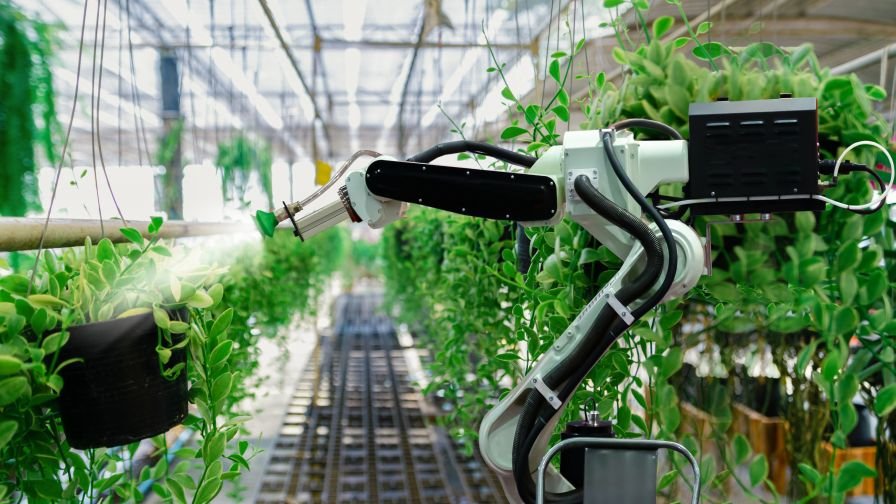
The industrial opportunity is larger than it first appears and closely aligned with Ontario’s existing economic priorities. Modern food processing plants increasingly resemble advanced manufacturing facilities: automated production lines, precision robotics, AI-managed logistics, and sophisticated cold-chain systems. The technology stack of a world-class food processor is not fundamentally different from that of an automotive supplier.
Ontario already knows how to build one. It has simply not yet decided to build the other at scale. The obvious question is how much faster they might accumulate if agri-food had Ontario’s full attention.
The most underappreciated dimension of the agri-food opportunity is how closely it overlaps with Ontario’s other strategic priorities of advanced manufacturing, critical minerals, clean energy, and supply-chain resilience. Automated food processing lines, robotic packaging systems, and AI-managed logistics draw on the same precision engineering competencies developed over decades in Ontario’s automotive sector.
Export performance suggests what might be possible. Between 2018 and 2024, Ontario agri-food exports grew faster than the province’s own Grow Ontario target of 8% annually. With focused capital attraction, regulatory acceleration, and visible political sponsorship, that trajectory could plausibly reach 16% annual growth. By 2032, exports could exceed $80 billion, supporting more than one million jobs and pushing sector GDP toward $90 billion.
Linamar Corporation offers a useful illustration. Headquartered in Guelph and long known as a major automotive supplier, the company has expanded into agricultural and food technologies. Its innovation hub brings together engineering expertise across automotive, energy, health, and agriculture, treating agri-food as a peer domain rather than a side project.
The policy implication is straightforward. With deliberate support, Ontario’s manufacturing sector could become a major exporter of agricultural technology, positioning the province not only as a global centre of food production but also as a supplier of the automation systems that advanced agri-food industries increasingly require. Countries such as the Netherlands and Germany have built substantial export sectors on precisely this foundation. Ontario has the competencies. It lacks, so far, the strategic intent.
ONTARIO'S GREENHOUSE SECTOR: A QUIET LESSON FROM AN UNASSUMING SECTOR
Ontario’s greenhouse sector offers a concrete illustration of both the opportunity and the gap. The province produces roughly 72% of Canada’s greenhouse vegetables, concentrated around Leamington and Kingsville in Essex County (with significant clusters in Hamilton and Niagara) it is the largest greenhouse cluster in North America. Nearly 2,000 acres of highly automated, year-round production generated $2.7 billion in farm-gate sales in 2024. Exports have risen to nearly $2 billion annually. The sector supports more than 32,000 jobs and contributes $2.3 billion to provincial GDP.
This is not traditional farming. Modern greenhouses are climate-controlled, sensor-managed facilities producing yields five times higher per acre than open-field tomatoes and up to thirty times higher for herbs. They operate year-round, provide stable employment, and sit within a day’s drive of 58% of the U.S. population. That logistical advantage is structural and largely unreplicable.
Despite these advantages, agri-food lacks the narrative clarity enjoyed by flashier industries. Automotive plants generate ribbon-cuttings and headlines. Farms and food processors generate steady employment and export receipts distributed quietly across dozens of communities. The result is a sector that is economically enormous yet politically understated.
That quietness has advantages. Distributed economic activity is inherently resilient. Investments in food production and processing tend to anchor economic growth in both rural and urban communities alike. Ontario does not need to create a new industry. It simply needs to accelerate one that already exists.
WHAT TO DO ABOUT IT
What the sector needs now is strategic seriousness from government; a clear signal that agri-food is core economic infrastructure, not a policy silo operating at the margins of the province’s industrial ambitions. The most powerful step the province could take would be largely symbolic: recognizing agri-food as a strategic industrial sector alongside automotive and other priority industries.
Such signals matter. Investors respond to them, research institutions align with them, and supply chains reorganize around them. Yet much of the automation technology used in these facilities comes from European firms such as Hoogendoorn, Ridder, and Priva, which have established North American operations in Ontario precisely because the province hosts the continent’s most advanced controlled-environment agriculture market. They are selling into Ontario what Ontario manufacturers could be building. Ontario’s success attracting electric-vehicle and battery investments demonstrates how powerful clear strategic direction can be.
Agri-food deserves the same clarity. Treating the sector as a central pillar of Ontario’s industrial strategy would not merely recognize that reality, it would help ensure the province’s next era of economic growth is built on assets that are globally competitive and fundamentally rooted at home. Ontario should lead that effort. and make the case nationally.
Because good things really do grow in Ontario.